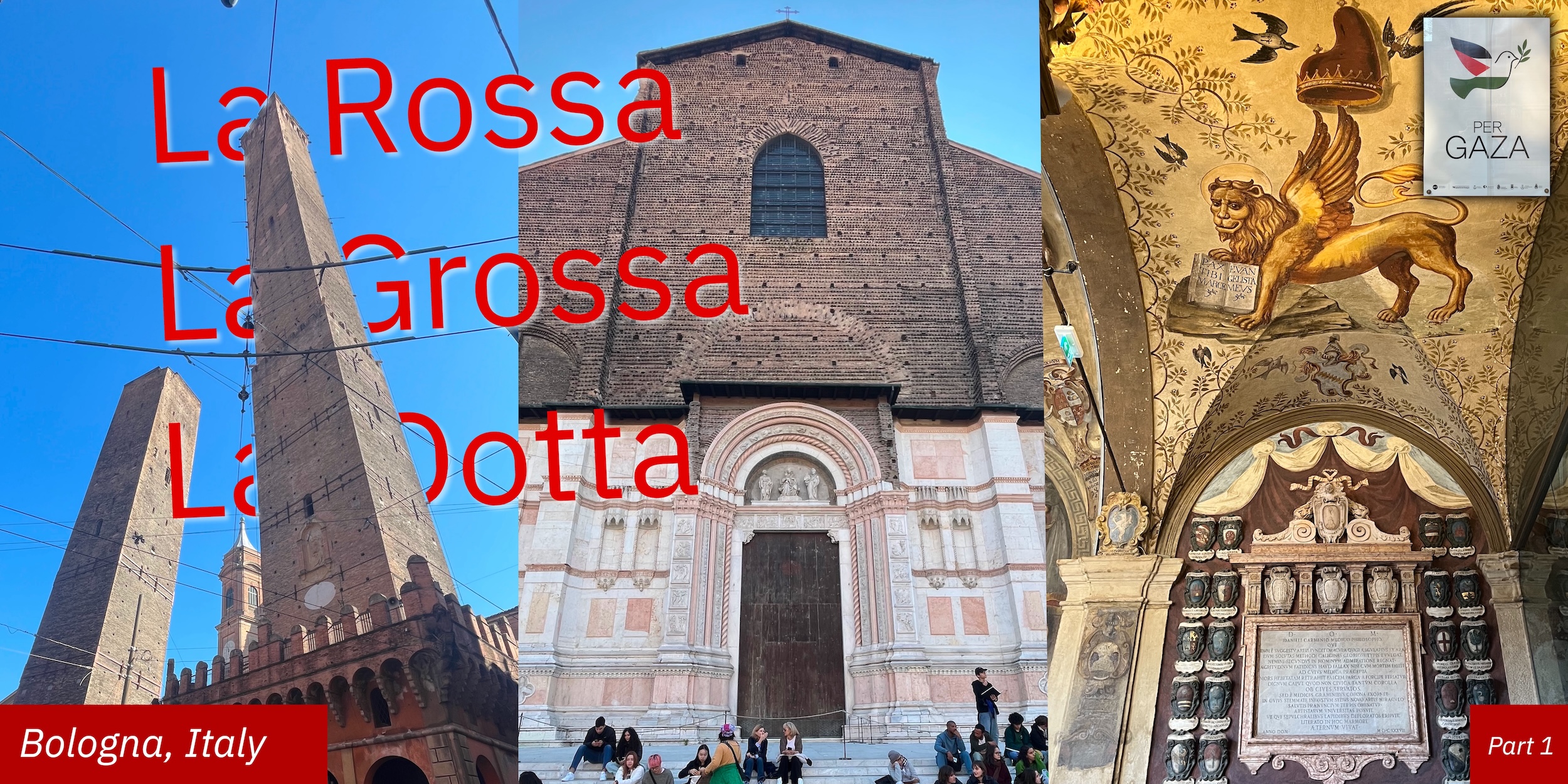
I was in Bologna, a city of Rossa, Grossa and Dotta; “Red”, “Fat” and “Learned” (+ la turrita; “towered”), which is an easy-to-travel Italian beauty, fast to enter from the airport, easy to walk on the streets without using any public transport, and a relieving atmosphere to breathe in.
I was partially interested in Italians; they’re the last nationally unified country in Europe, a strong player in the historic landscape, a Mediterranean folk with lots of similarity with us Turks. The popular cities of Italy have a burden of managing the crowd and the city services. Bologna contradicts the popular Italian cities in this regard. And that was the motivator for me (who is less willing to visit a city without a reason) to visit there.
In the streets, I was turned over by locals, and they asked something in Italian. When I said I’m not a local, Italians responded like, “Then you’re the exact twin of Giovanni.” It was shocking to see how many locals behaved toward me like I’m a local. By using this opportunity, I let myself get used to aligning my ears to Italian phonetics.
A thought: I don’t like behaving like a tourist in a city; for example, planning a trip around a tour (via bus or city walk) is something that lets me skip the cartoons and graffiti in the secluded backstreets of the city. And as one of my accustoms in a city, I shall see some street art to understand locals.

For example, this tourist train is like a fun city project for 0–6 years old. :)
Let’s walk over some points;
A city of portico

We can see porticoes that cover every building, which makes it comfortable to visit the city; we’re protected from the weather effects in a Mediterranean climate. They originated from the times of the first universities. When universities pulled people, public space needs increased, and porticoes functioned well in that area.
As Italy’s official tourism website states:
The porticoes were the ideal solution, allowing the upper part of buildings to be extended while offering shade and shelter from the weather. The porticoes, which had sprung up almost spontaneously, were regulated from 1288 with a proclamation that required the addition of porticoes to existing houses and stipulated that new buildings must be built with a portico.

We even see porticoes outside the historic center. They’re not like the historic ones; there are no curvatures, but they still provide a function to visitors or venues. That area can be used as a showroom or for dining tables as well. So it’s a good example of continuing a tradition.
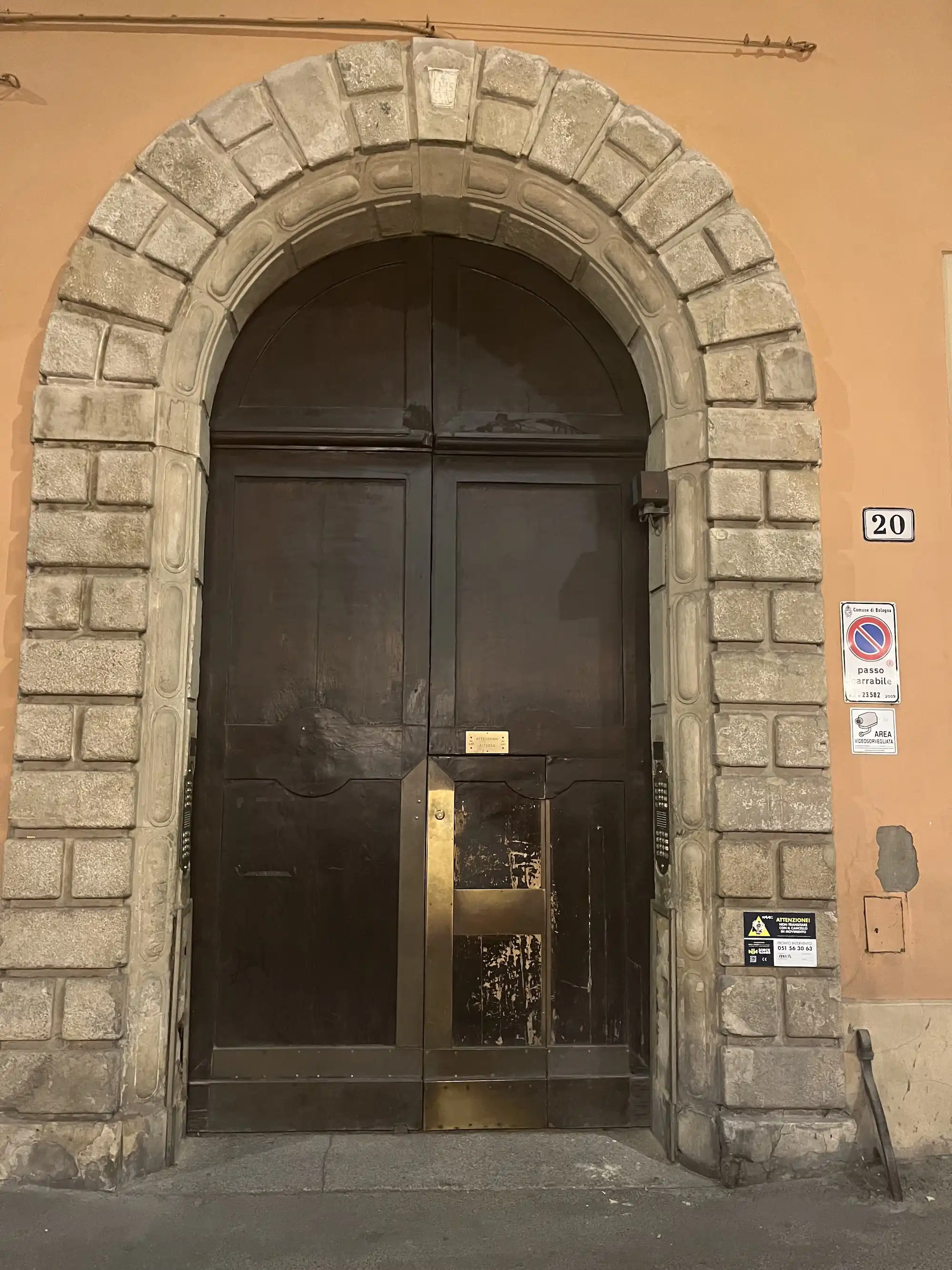
Porticoes are high, nearly equivalent to 2 floors. In the new buildings, they’re placing 2 floors; in historic ones, it’s 1 giant floor. They even place a small door inside these doors to make it easy to enter.

Show, Not Hide
Like the famous Pisa tower, Italians (in the far history) were not excellent at building towers — the towers skew over time. The Italian solution is to make them touristic, and it’s one of the things we can appreciate. The twin towers are constantly observed via different kinds of sensors, and we got amazed by the story.
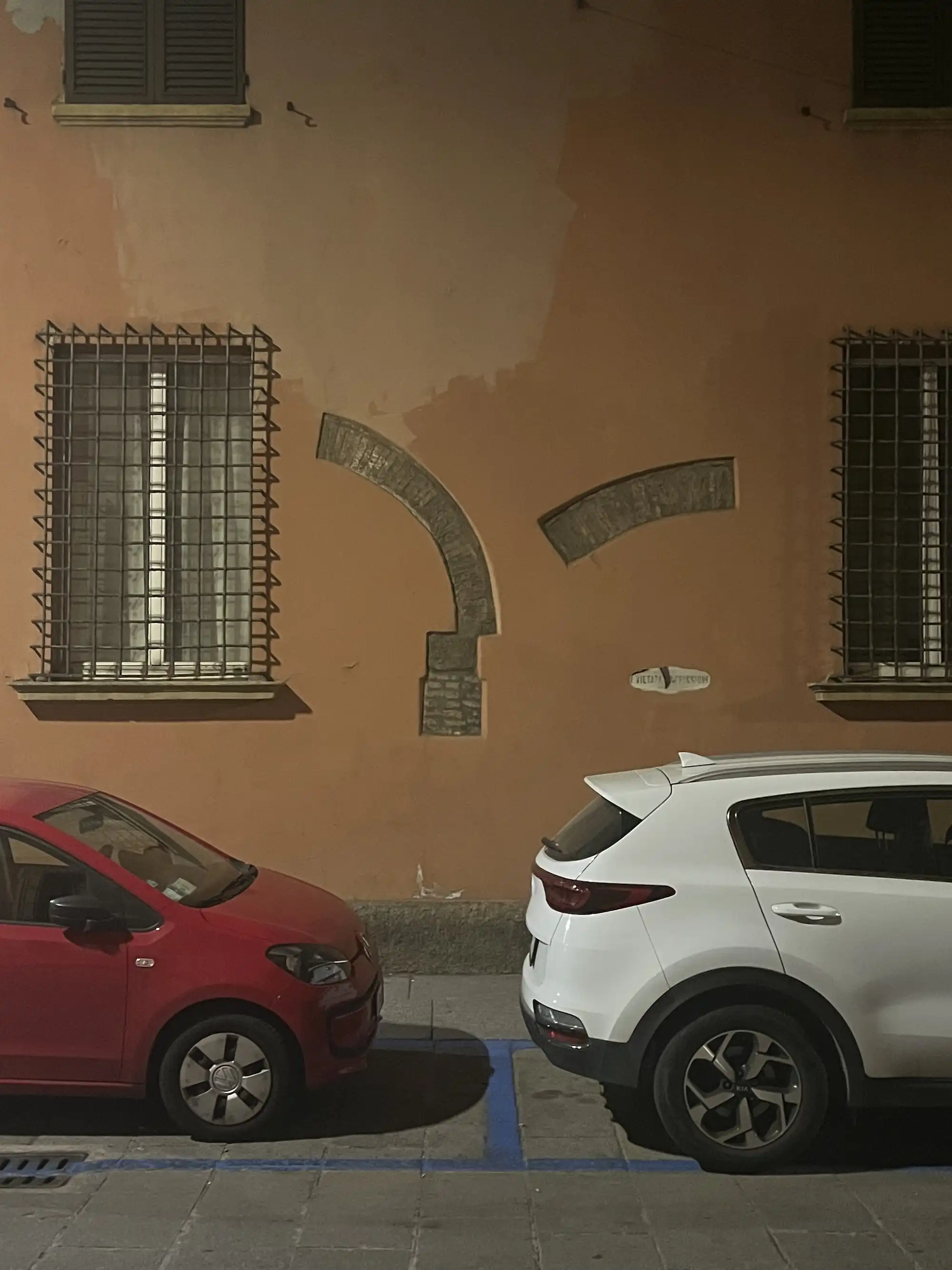
Historical origin is uncovered partially.
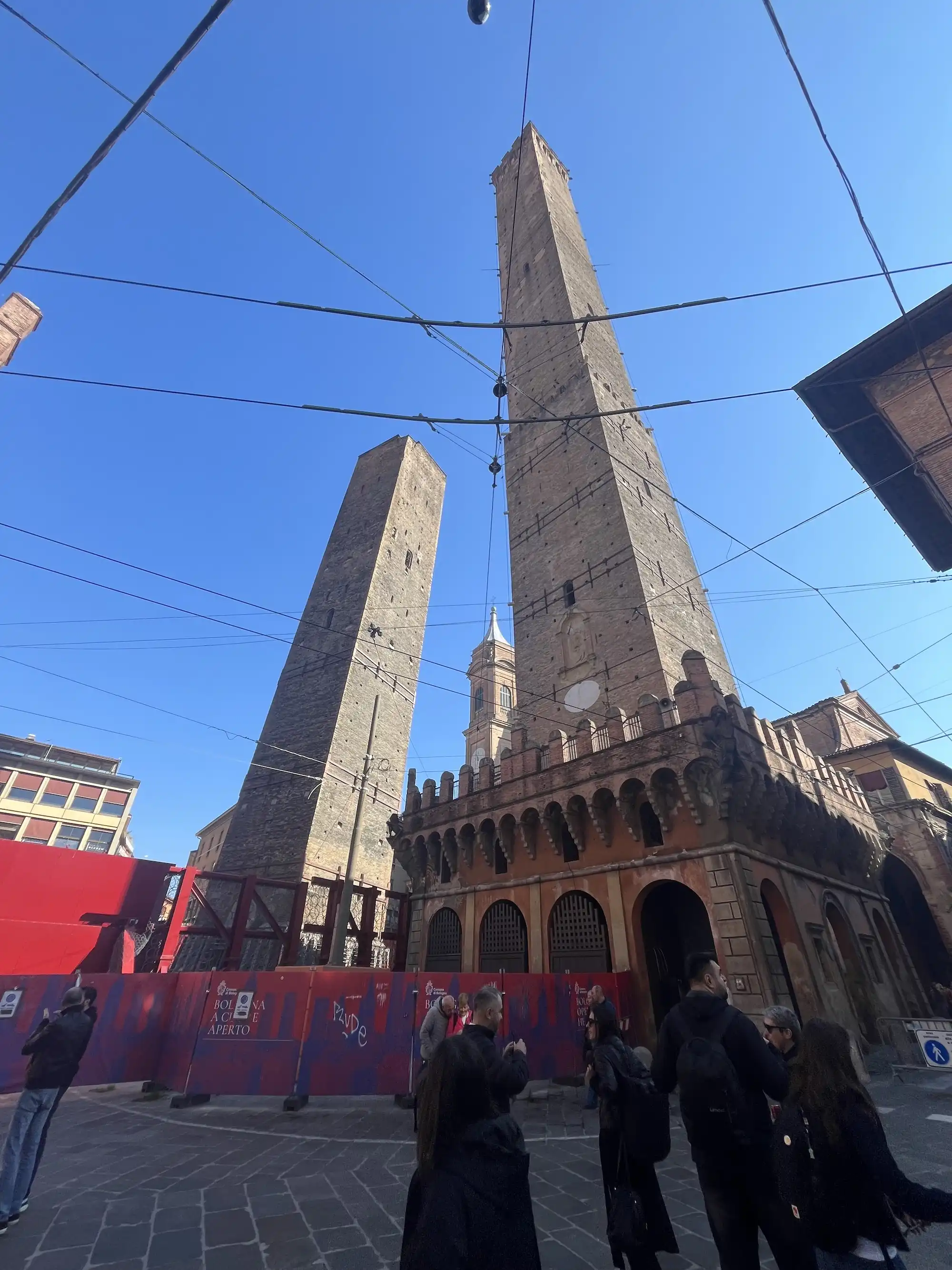
Famous twin towers are constantly observed via sensors. Btw, when you approach them you can feel the scale of units; it’s difficult to understand from photos.

How they observe the towers, and how they cannot observe the touristic information. :)
Some artifacts are like 3D printed parts; after a pause, the body has two different instances together. Still, it’s no blocker to proudly present itself.
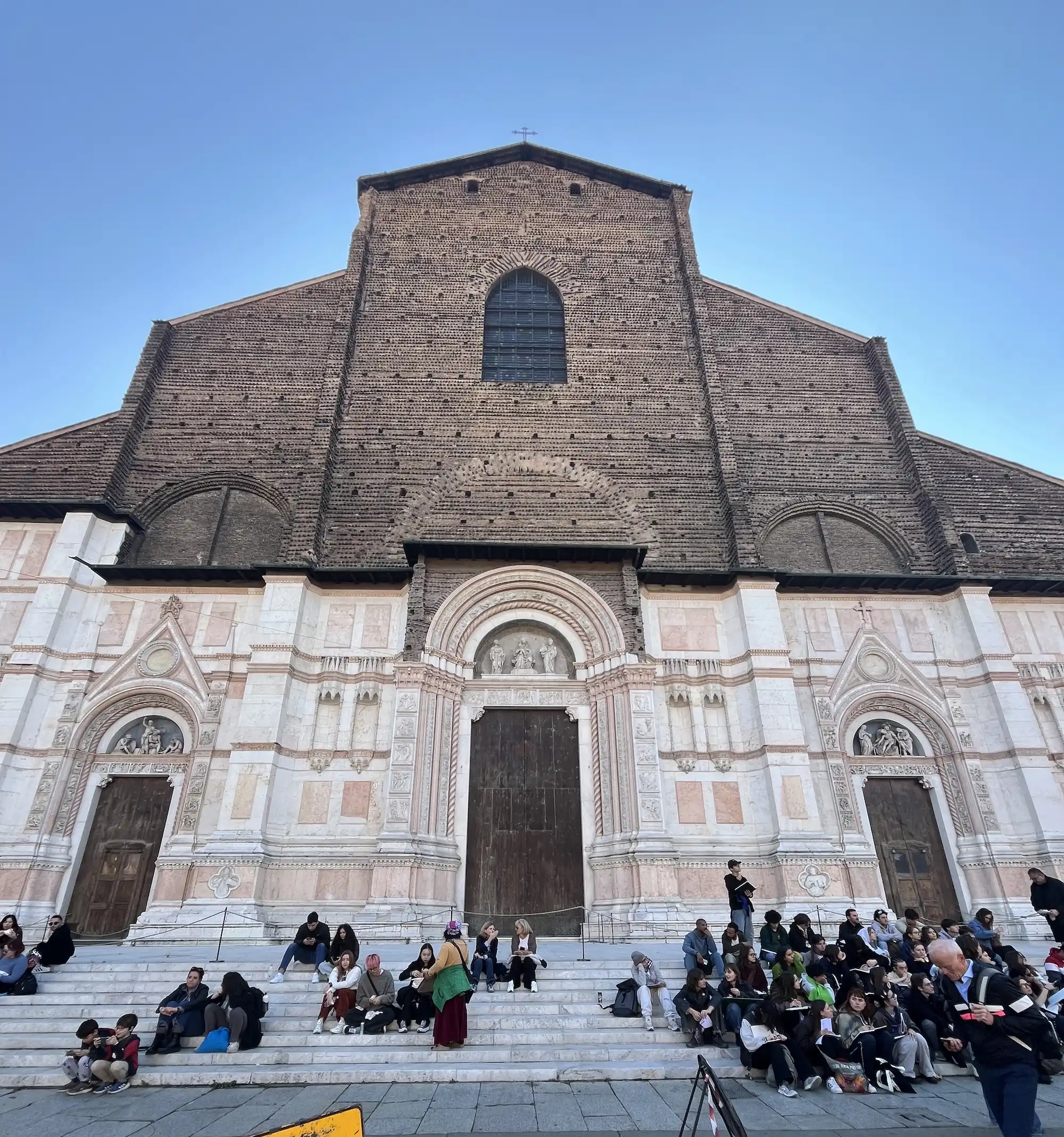
Basilica di San Petronio
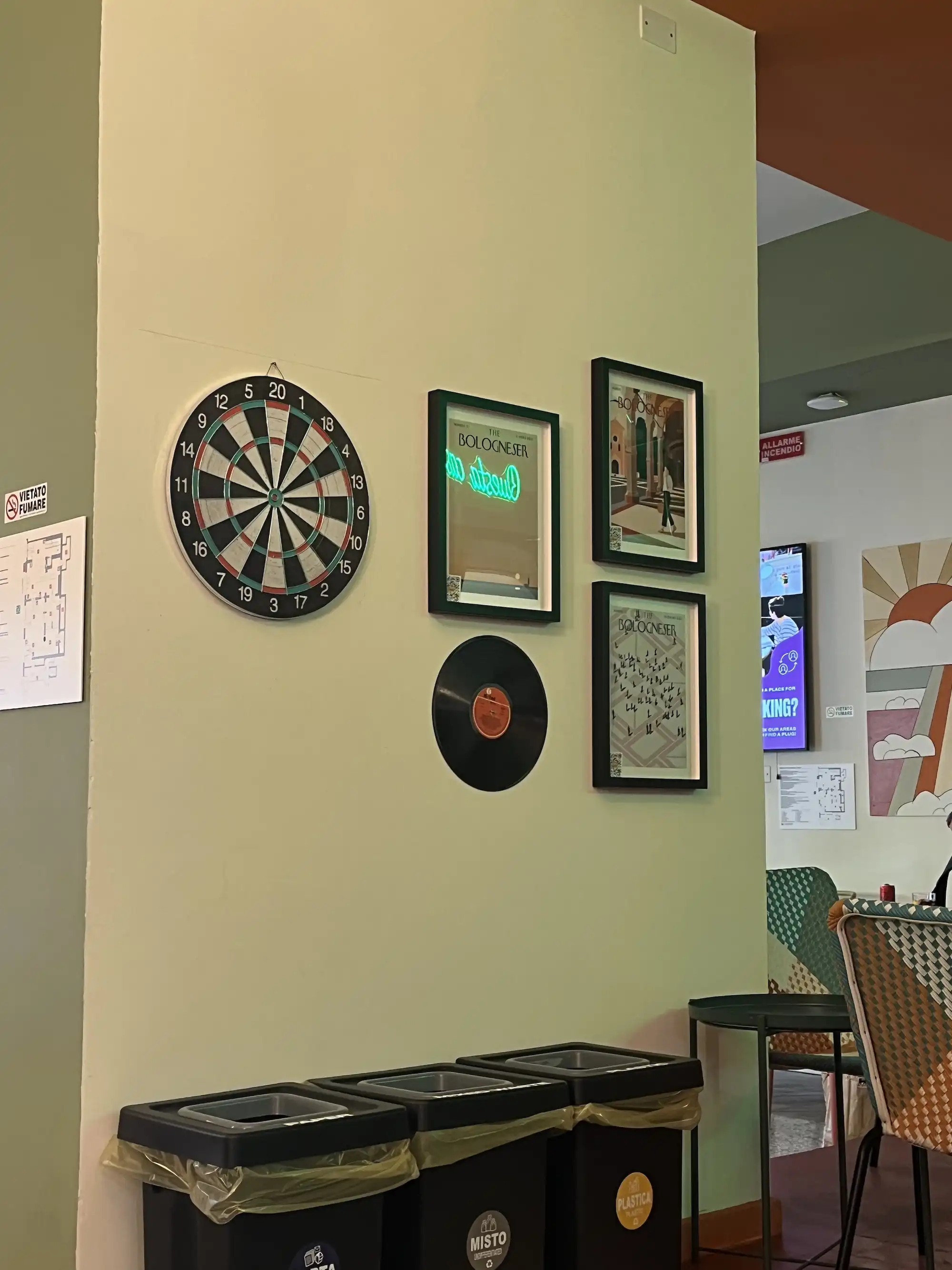
They have a good talent in showing something even not existing; they have a pseudo-magazine, “The Bologneser,” which is wall art.
Some (street) arts

Palestinian Child

A mini curation of sarcastic collage near Piazza Santo Stefano.
This is not street art, but you can see artworks even in the street. So, it seems like a national accustom — art-making is a job.

Other art instances in streets are reliefs. (ITA: Il rilievo)

I honestly don’t know what relief represents which history or which family’s heritage. It looks classicistic, and sometimes their scale is eye-catching — it’s certainly an attention catcher.
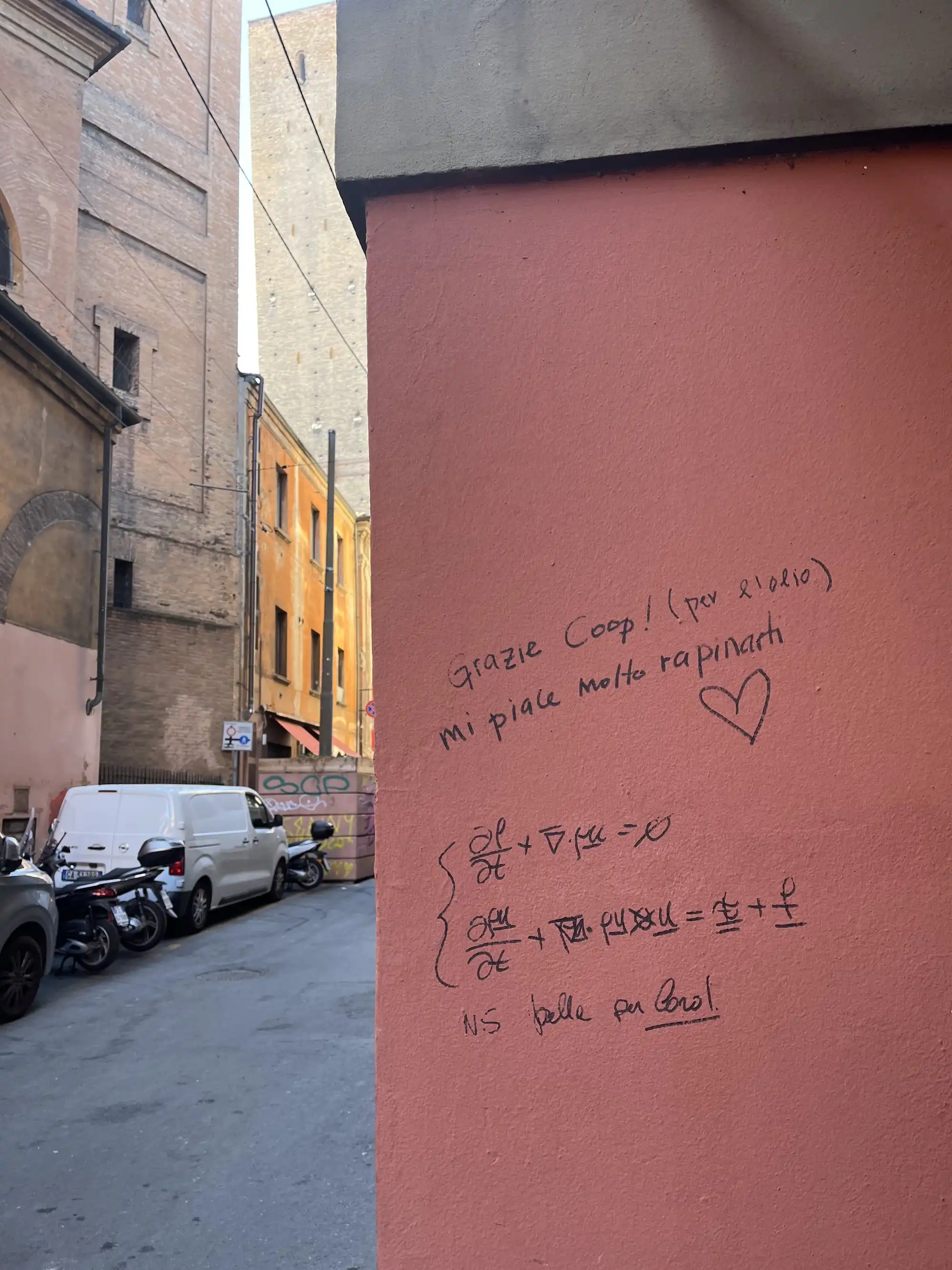 I’ve never seen a city wall, which don’t say anything to police. Every nation has a willingness to talk with the police force. :)
Grazie coop! (per l’olio)
mi piace molto rapinarti
But I saw a differential equation for the first time (it might be okay in a city of universities).
About Literature
Unluckily, I don’t know Italian, but nowadays I’m in the process of learning it. However, it’s still a joy to get yourself used to books in the local language, so I took the joy of glazing over the books while eating or drinking something.
I cannot tell much about Italian literature, but I got inspired when I visited 300+ year-old libraries and crowded bookshops.

Did you know that the more words you know, the freer you are?
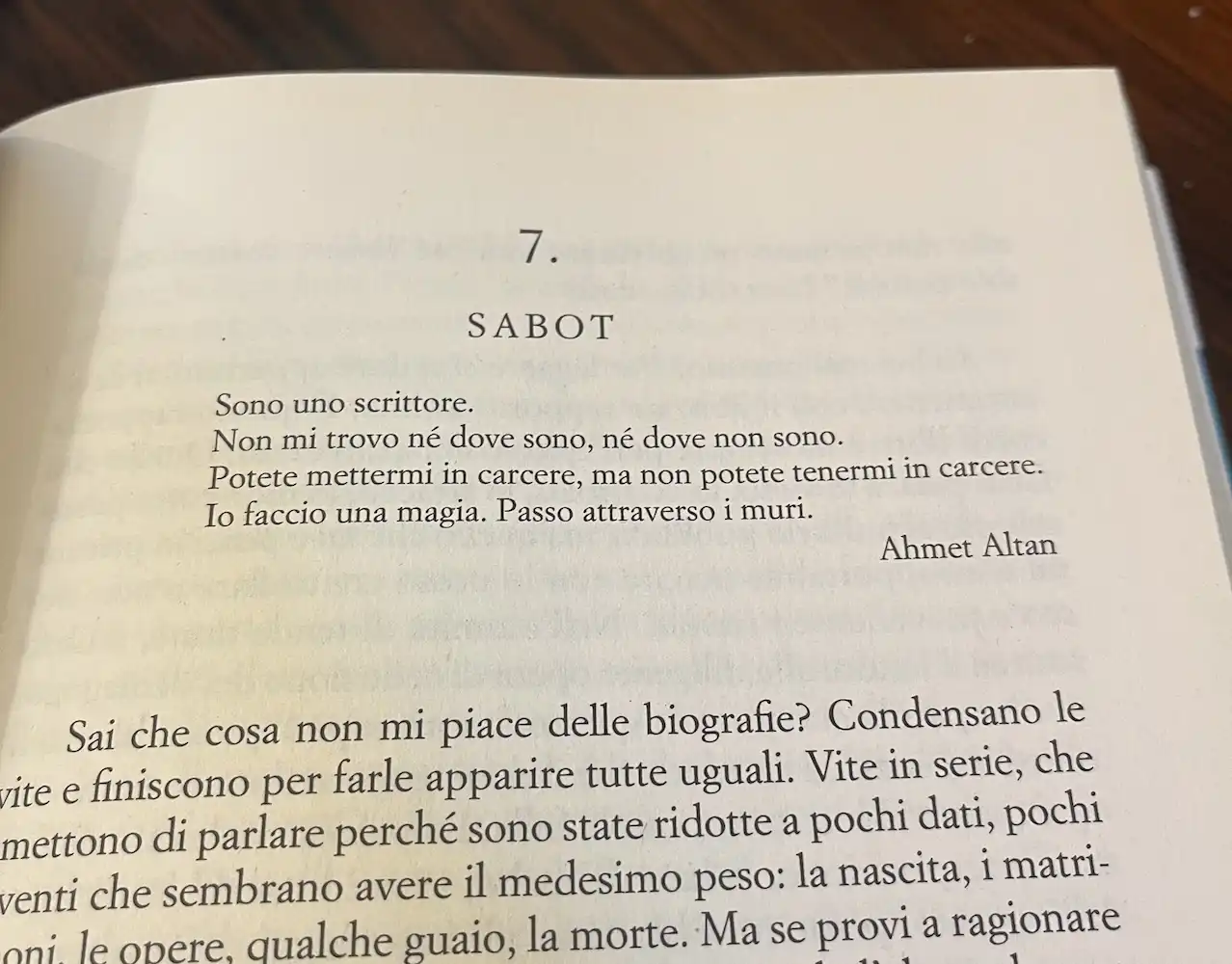
I saw lots of references from Turkish writers & thinkers like Ahmet Altan in Italian literature and non-fiction works. It’s not purely because of Italians’ Turkish affection, but also due to the Turkish population in Italy.
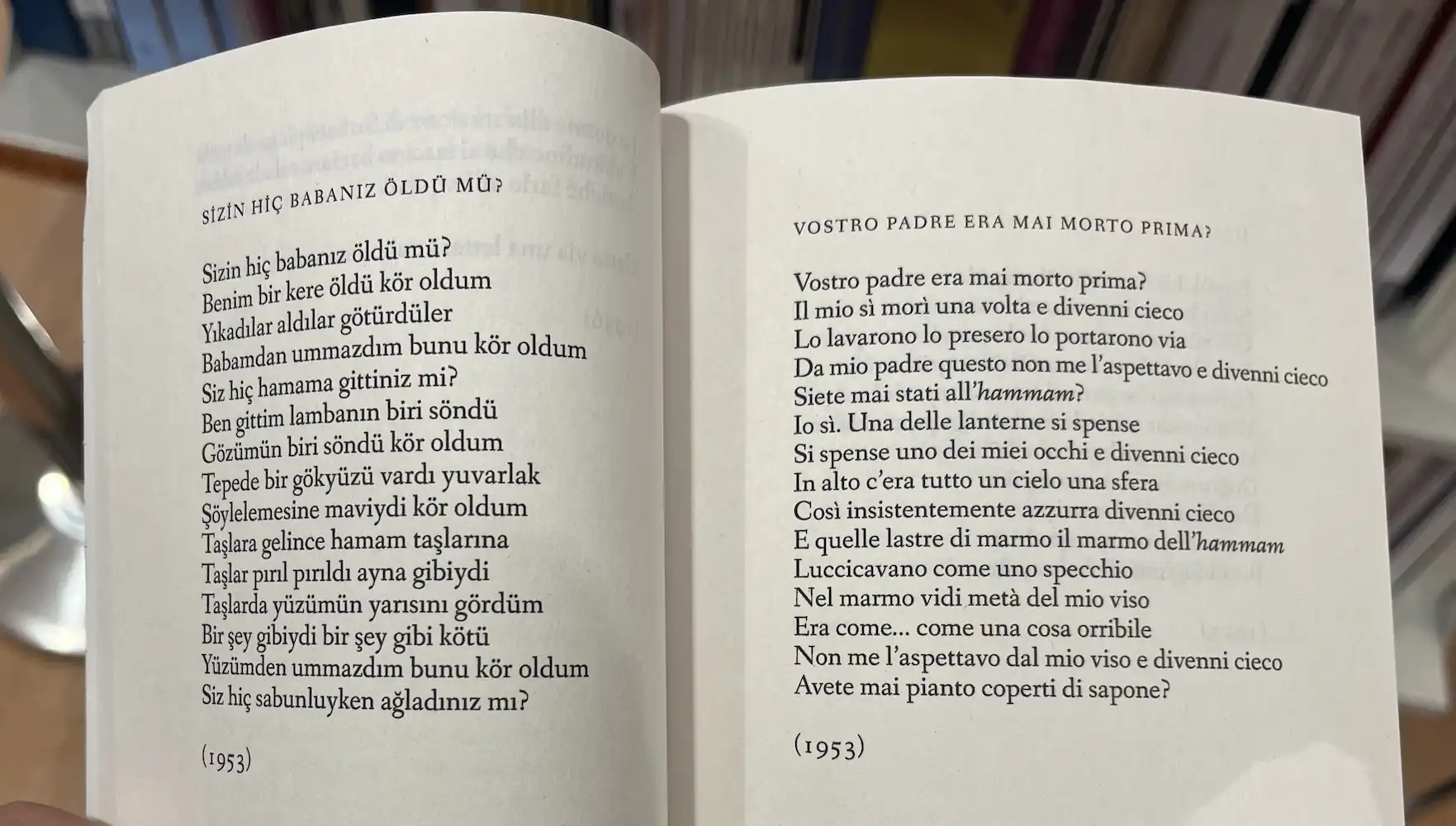
A Cemal Süreya (a Turkish poet) translation
And to conclude my post with other non-material points, let me list a few points too:
Some Italian Behaviors
- “Kiss & Fly” marking in the airport parking lot; let’s kiss your family & friends and then fly :)
- Aromatics for espresso; adding a wine that tastes like honey-mustard sauce, or 0-calorie sweeteners
Surprisings
- Seeing real examples of near-socialist history
- Their support for Palestine, or their focus on the Israel-Palestine situation; I saw lots of bookstores that highlight some books on the origins of the issue
- Italians still wear bigger glasses. I guess this will be a centuries-wide cliché for Italians. But I shall say, it fits well on them!

A shelf of Palestine-related books
Last Note
I got inspired in Bologna. That’s all from part one of my trip. I have some other points to be made, with deeper bonding and meaning. Do you think it’s worth writing the second part? Please feel free to ping me if I shall write the 2nd part!